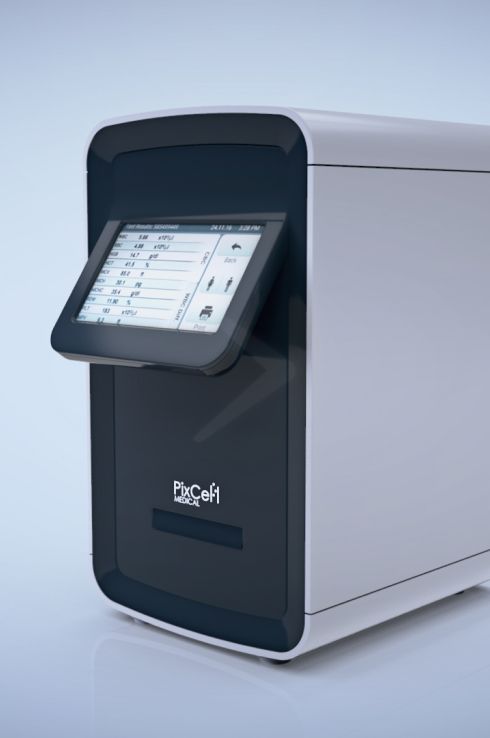
Want to learn more about PixCell? No problem - fill in your details below and our team will be in touch!
We appreciate you contacting us. One of our
colleagues will get back in touch with you soon!Have
a great day!

For most hospital departments, obtaining a complete blood count is routine. In mental health services, it often is not.
Across the NHS, mental health teams are caring for more people, with greater complexity, under sustained operational pressure. NHS England reported that around 3.8 million people were in contact with NHS mental health, learning disability and autism services in 2023/24, up almost 40% compared to 2018/19. The Care Quality Commission has also reported rising demand for crisis care, including a 77% increase in very urgent crisis referrals in 2024/25 compared with the previous year.
Within that pressure, blood testing can become a hidden bottleneck. Whether monitoring patients receiving clozapine, investigating infection, assessing physical deterioration, or supporting treatment decisions, clinicians often need rapid access to reliable haematology results. But in psychiatry, the challenge is rarely the CBC itself. It is everything required to obtain it.
Mental health services span community clinics, acute wards, psychiatric intensive care units, forensic services, rehabilitation settings and secure environments. Patients may be distressed, paranoid, severely anxious, needle-phobic, autistic, cognitively impaired, or reluctant to engage with care. Moving them outside their therapeutic environment for a blood test may require escorts, transport, appointment coordination, and significant disruption to clinical routines.
This is where psychiatry differs from many other specialties. A blood test is not just a diagnostic step. It can affect trust, treatment adherence, staff time, ward flow and patient dignity. The problem, therefore, is not that CBC testing is unavailable. The problem is obtaining it without disrupting care.
Few medications have transformed the treatment of severe mental illness as profoundly as clozapine. For patients with treatment-resistant schizophrenia, it remains the most effective antipsychotic available and is widely regarded as the gold standard when other therapies have failed. Yet despite its proven effectiveness, clozapine remains consistently underutilized.
The reason is well understood.
Because of the risk of agranulocytosis and other haematological abnormalities, patients receiving clozapine require regular full blood count monitoring throughout treatment. In the UK, monitoring begins with weekly testing before gradually reducing in frequency, creating a lifelong commitment to routine haematological surveillance. Published studies have identified the burden of repeated venous blood sampling as one of the principal barriers to both initiating and maintaining clozapine therapy, while many clinicians report reluctance to prescribe the drug because they anticipate patients will refuse ongoing blood monitoring.
Yet focusing solely on clozapine risks overlooking a much broader challenge.
Psychiatric care operates differently from almost every other medical specialty. Mental health services span community clinics, acute inpatient wards, psychiatric intensive care units (PICUs), forensic hospitals, rehabilitation services, and secure environments, each with unique clinical and operational demands. Many patients experience severe anxiety, paranoia, cognitive impairment, or behavioural disturbances that make conventional venepuncture difficult. Others have profound needle phobias or require significant reassurance before even routine procedures can be attempted.
For these patients, the challenge is rarely the blood test itself. It is everything required to obtain it. What is a routine laboratory procedure in most hospital departments can become one of the most disruptive parts of psychiatric care.
“It’s really simple to use, portable and offers results from a very small drop of finger-stick blood which allows us to transport it between clinics and provide tests in any environment — a game-changer for our workflow.
But perhaps the greatest advantage is also the simplest— our patients’ overwhelming approval of the finger-stick test. It’s less intimidating than traditional methods, making the testing experience more comfortable for them. We’ve been teasing this option for years, but finally being able to deliver it brings us immeasurable joy. HemoScreen has truly transformed our approach to patient care, and we couldn’t be happier with the outcomes.”
-Cumbria, Northumberland, Tyne & Wear NHS Foundation Trust
Traditional laboratory workflows were designed around centralized diagnostics. Samples are collected, transported, processed, and reported back to the requesting clinician. In most specialties, this model works well. Psychiatry presents a different reality.
Moving patients outside their familiar therapeutic environment may require additional nursing staff, security escorts, transportation, appointment coordination, and significant disruption to both clinical schedules and patient routines. For secure inpatient units, every hospital transfer carries financial, operational, and clinical implications beyond the laboratory test itself.
Equally important is the therapeutic relationship. Successful psychiatric care depends on trust, continuity, and patient engagement. When blood sampling becomes stressful or confrontational, clinicians risk creating an additional barrier to treatment adherence, particularly for patients already reluctant to engage with services.
These challenges are reflected across NHS mental health services.
Similarly, researchers at South London and Maudsley NHS Foundation Trust noted that the requirement for repeated venous blood sampling remains one of the principal reasons patients decline or discontinue clozapine therapy, despite its unmatched effectiveness for treatment-resistant schizophrenia. The problem, therefore, is not the CBC itself, but obtaining one without disrupting care.
“The finger-stick method has been particularly beneficial, reducing the invasiveness of the process and enhancing patient experience. With its user-friendly design, rapid results, and ability to test using either a finger-stick or venous sample, we found HemoScreen to enhance patient comfort and support quicker initiation of clozapine therapy, leading to a reduction in hospital stays and an overall improvement in patient quality of life.”
-South London and Madsley NHS Foundation Trust
For decades, NHS mental health services have moved care closer to patients through community teams, crisis services, early intervention programmes and recovery-focused models. Diagnostics, however, have often remained tied to conventional laboratory pathways.
Near-patient CBC changes that model. Rather than treating blood testing as a separate event, it becomes part of psychiatric care itself. The nurse, psychiatrist, medication review, blood test and clinical decision can take place in the same service, often during the same patient encounter. This is not simply point-of-care testing. In psychiatry, the stronger idea is integrated diagnostics: bringing laboratory-quality results into the environments where mental health care is actually delivered.
For a community clozapine clinic, it may mean fewer failed appointments and better treatment continuity. For a secure unit, it may mean avoiding unnecessary transfers. For a patient with needle phobia, psychosis, autism or severe anxiety, it may mean that blood monitoring becomes acceptable rather than frightening.
The clearest example is clozapine. For patients with treatment-resistant schizophrenia, clozapine remains the most effective antipsychotic treatment, yet it is still underused. One reason is practical: patients require ongoing full blood count monitoring because of the risk of agranulocytosis and other haematological abnormalities.
Published research from South London and Maudsley NHS Foundation Trust evaluated HemoScreen in 226 patients receiving clozapine and found clinically acceptable agreement with standard laboratory testing for WBC, neutrophils and eosinophils. The authors concluded that accurate capillary monitoring may improve clozapine uptake and adherence by reducing the burden of repeated venous sampling.
That evidence matters because the real-world problem is not only analytical, it is human. Blood monitoring can be one of the reasons patients refuse clozapine, discontinue treatment, or never start it in the first place. At Kent and Medway NHS and Social Care Partnership Trust, a service evaluation involving 78 patients found that 96% were very satisfied with finger-prick testing, 95% found it much more convenient than traditional venous sampling, and 97% were confident in the accuracy of the results.
“The finger stick option has been a game-changer for patients with needle phobias… We have been able to support more patients in staying on track with their treatment plans, ultimately improving their care and outcomes.”
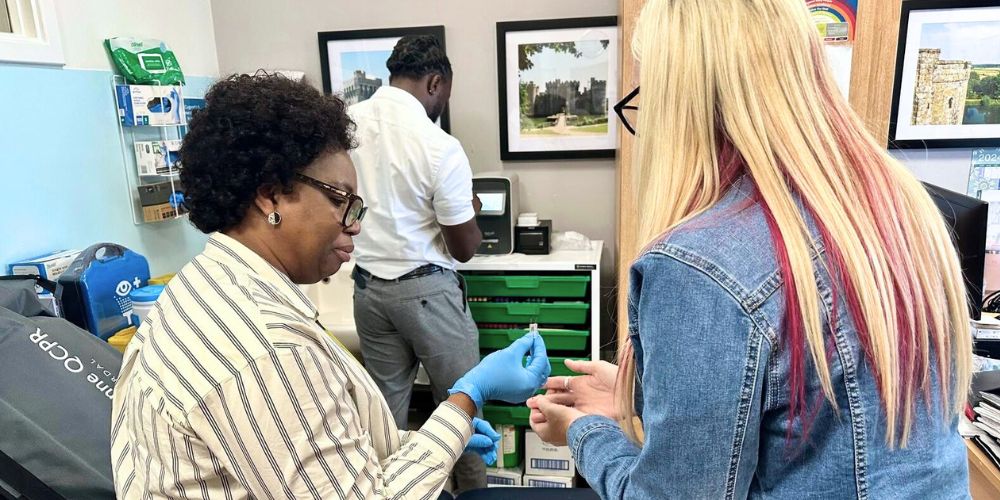

The point is less about every patient needing finger-prick testing; it’s about choice. For some patients, venous sampling is acceptable. For others, especially those with needle phobia and other venous sampling challenges, a finger-prick CBC can be the difference between a failed or successful diagnosis. That has clinical consequences. It can support more patients to remain on clozapine, help clinicians investigate physical illness sooner, and reduce avoidable disruption in services already under pressure.
One of the strongest themes emerging from NHS deployments is that the value of near-patient CBC is not only clinical. It is operational.
In secure and inpatient mental health settings, every external transfer can require planning, escorting, staffing and risk management. In community clinics, failed venepuncture may mean a return visit, delayed treatment, or another missed opportunity to engage the patient. In both settings, diagnostics that sit outside the psychiatric workflow create friction.
At the Tamarind Centre, part of Birmingham and Solihull Mental Health NHS Foundation Trust, clinicians introduced near-patient CBC testing to make essential diagnostics practical within a secure psychiatric environment. Rather than relying solely on external laboratory pathways, clinicians are now able to obtain immediate full blood counts when patients deteriorate unexpectedly, helping distinguish possible physical illness from psychiatric deterioration and supporting faster escalation when required. As Clinical Director Dr Dinesh Maganty explains, a full blood count is not only invaluable, it can be life-saving.
The operational case is also significant. At Tamarind, each hospital transfer from the secure unit has been estimated at approximately £3,000, while each inpatient bed released earlier saves around £500 per night. The service therefore moved beyond using HemoScreen only for clozapine monitoring and made testing available more broadly across the centre.
That is the pattern worth emphasising. Near-patient CBC may enter a service through one use case, but once embedded, clinicians often begin to see wider value: urgent assessment, infection screening, physical health monitoring, treatment continuation and faster decision-making.
“The flexibility of HemoScreen in accommodating both [venous & finger-stick] samples has greatly enhanced patient adherence to treatment. By reducing the barriers associated with traditional blood draws, we have been able to support more patients in staying on track with their treatment plans, ultimately improving their care and outcomes.
Based on the roaring success of the trial, we are excited to be expanding the use of HemoScreen to additional locations across our trust.”
-Kent & Medway NHS and Social Care Partnership Trust
This shift is no longer confined to isolated pilot projects. HemoScreen is now deployed in over a third of NHS mental health networks and in more than 100 mental health clinics. The device’s widespread adoption across the UK is being shaped by NHS clinicians working across community, inpatient and secure mental health services.
At South London and Maudsley NHS Foundation Trust, published evidence supports the analytical foundation for using HemoScreen in clozapine monitoring. At Kent and Medway NHS and Social Care Partnership Trust, patient satisfaction data shows the impact of finger-prick testing in a community clozapine clinic. At Birmingham and Solihull Mental Health NHS Foundation Trust, the Tamarind Centre demonstrates the operational value of keeping diagnostics inside a secure psychiatric environment. Together with experience from Cumbria, Northumberland, Tyne and Wear NHS Foundation Trust, these deployments point to the same conclusion: psychiatric diagnostics work best when they are integrated into psychiatric care.
“HemoScreen has become an essential tool in our patient management strategy.”
For NHS mental health services, the question is no longer only whether a CBC result can be produced accurately. It is whether that result can be produced in the right place, at the right time, without pulling patients out of the care environment designed to support them.
That is the real shift.
CBC testing is routine. But in mental health care, obtaining it often is not. By bringing lab-quality CBC testing into the clinic, ward and secure unit, NHS services are beginning to remove one of the quiet but persistent barriers between psychiatric patients and the care they need.
(*) Please note: training must be defined by local, state and federal regulations. In the USA, training is defined for CLIA moderate complexity devices.