Rapid CBC Testing at the Principle Health Systems STAT Lab

  • PixCell Medical
  • 06 Oct 2026

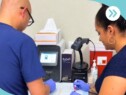
For Principle Health Systems, delivering STAT laboratory services means getting critical information back to providers when every minute matters. With HemoScreen, Principle has brought the CBC down to approximately five minutes, helping its laboratory teams move testing efficiently and enabling providers to make clinical decisions sooner.

Now deployed within Principle’s STAT laboratory environment, HemoScreen is showing how rapid CBC testing can strengthen an already time-sensitive service, combining speed with a simple workflow that staff have been able to integrate quickly into daily operations.


When STAT really means STAT

For Principle Health Systems, laboratory testing often begins far beyond the walls of a traditional hospital. Through Principle Laboratory, the organization provides laboratory services across a broad network of healthcare settings, including skilled nursing facilities, assisted living, home health, long-term acute care and physician practices. Its mobile phlebotomy teams bring specimen collection directly to patients, while a network of laboratories provides routine and STAT testing to support thousands of referring providers.

It is a model built around accessibility and speed. But when a test is ordered STAT, every part of the process matters. A complete blood count (CBC) is one of the most frequently used tools for assessing a patient’s condition, providing information that can contribute to decisions around infection, anemia, bleeding and other acute clinical concerns. In time-sensitive settings, however, the clinical value of that information is closely tied to how quickly it reaches the provider.

For a laboratory built to handle urgent testing at scale, reducing CBC turnaround time therefore presented an opportunity to strengthen an already rapid service.


Bringing the CBC down to minutes

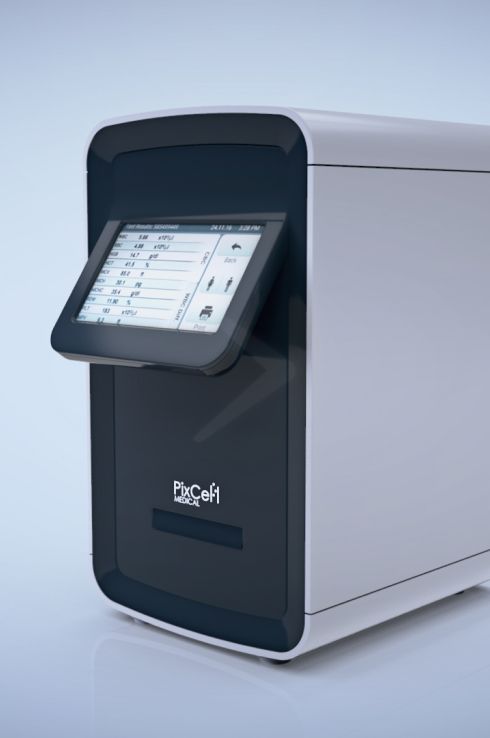
Principle deployed HemoScreen within its STAT laboratory environment to provide a rapid 5-part differential CBC using a compact, cartridge-based analyzer.

Unlike conventional hematology systems, HemoScreen requires no analyzer maintenance or calibration. Each single-use cartridge contains the necessary reagents and keeps the blood sample sealed throughout analysis. Once the sample is loaded, a CBC with 5-part differential is available in approximately five minutes. For Principle, that speed has translated directly into workflow.

“HemoScreen has simplified our CBC workflow by providing reliable results in approximately five minutes, allowing our teams to move through testing efficiently and get results to providers much faster.”

The importance extends beyond the analytical turnaround time itself. In a STAT workflow, the result is part of a chain that ultimately leads to a clinical decision. Removing time from the laboratory stage means the information can reach the provider sooner.

Evidence from point-of-care and rapid laboratory testing supports the importance of this time advantage. A systematic review and meta-analysis found that point-of-care testing was associated with clinical disposition decisions being made approximately 40 minutes earlier than with usual laboratory testing. More broadly, research into STAT testing has shown that faster laboratory results are most valuable when they are integrated into clinical workflows that allow providers to act on that information immediately. That is exactly what Principle has observed.


“Having CBC results available so quickly has had a meaningful impact on patient care. Faster results allow providers to make clinical decisions sooner, which can help reduce patient wait times and improve the overall patient experience.”

-Norma E. Gonzalez, STAT Laboratory Director, Principle Health Systems


Speed without adding complexity

Increasing laboratory speed is valuable only if the process required to achieve it remains manageable in daily operation. That is where the HemoScreen model has also proved important for Principle. Despite performing a full CBC with 5-part differential, the testing process is highly automated. Principle reports that staff quickly became comfortable with the analyzer following implementation and training, and that QC procedures were straightforward to incorporate into the laboratory’s existing workflow.

The simplicity is particularly relevant in a busy STAT environment, where new technology cannot become another operational bottleneck. According to Gonzalez, the combination of rapid analysis and ease of operation has helped Principle maintain an efficient testing workflow while managing the demands placed on its STAT laboratory.

The experience has also highlighted another part of successful implementation that is less visible in instrument specifications: technical support. When Principle’s technicians encountered a sampling challenge after a change in the materials used in the samplers, PixCell’s service team worked with the laboratory to identify alternative sampling techniques and resolve the issue.

For a laboratory operating around the clock and built around rapid service, that responsiveness is part of maintaining the workflow just as much as analyzer performance.


Extending Principle’s rapid laboratory model

Principle Health Systems has built its laboratory service around making diagnostic testing more accessible to healthcare providers and patients across a wide range of settings. Mobile specimen collection brings laboratory services to patients where they are, while STAT testing helps ensure that urgent samples are prioritized when time matters.

HemoScreen adds another layer to that model. By reducing CBC analysis to approximately five minutes while keeping operation simple, the analyzer allows Principle’s STAT laboratories to move an essential diagnostic test through the laboratory rapidly and get results back into the hands of providers sooner. For Principle, the result is not simply a faster CBC. It is a diagnostic workflow better aligned with the purpose of STAT testing itself: minimizing the time between the need for information and the clinical decision that follows.

The evaluation concluded that introducing HemoScreen was “a game-changer” for Clozapine monitoring, particularly for patients with needle phobia or difficulty providing venous samples. Based on the overwhelmingly positive results, KMPT decided to expand HemoScreen deployment across all Clozapine clinics and inpatient units.

STAT lab analyzer


“For an organization considering HemoScreen, I would recommend it for settings where speed, ease of use, and efficient CBC testing are priorities. The ability to obtain CBC results in about five minutes, along with the support available when challenges arise, is especially valuable in a STAT or time-sensitive clinical environment.”

-Norma E. Gonzalez, STAT Laboratory Director, Principle Health Systems


References


Acknowledgments

(*) Please note: PixCell Medical is not associated with Principle Health Systems, nor did it take part in evaluating or selecting the device. To the best of our knowledge, there is no conflict of interest in the opinions expressed above.

(*) Please note: training must be defined by local, state and federal regulations. In the USA, training is defined for CLIA moderate complexity devices.